Showing posts with label drugs. Show all posts

Sunday, May 19, 2013

Western leaders study 'gamechanging' report on global drugs trade

If one of the main unintended consequences of the war on drugs is to increase criminality and the trafficking of drugs, will removal of the prohibition lead to a better world?  Or will it have its own unintended consequences?

From - http://www.guardian.co.uk/politics/2013/may/18/drugspolicy-drugs-trade

In an open letter, former Latin American leaders call for legal regulation to help undermine organised crime
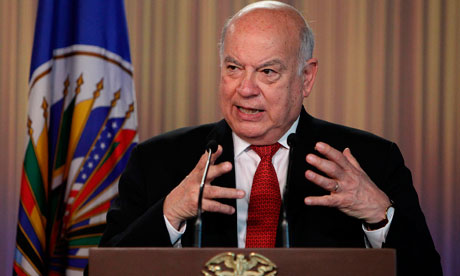
José Miguel Insulza


After more than four decades of a failed war on drugs, calls for a change in strategy are growing louder by the day. In Latin America, the debate is positively deafening. Statesmen from Colombia, Guatemala, Mexico and Uruguay are taking the lead for transformations in their own drug regime, which has set a strong dynamic of change across the region and around the world. Their discussion has expanded to the US, where public opinion toward regulation is also changing.
For the first time, the majority of Americans support regulated cannabis for adult consumption. Nowhere has this support been more evident than in Colorado and Washington, states that recently approved new bills to this effect. This shift in public opinion presents a direct challenge to the US federal law, but also to the United Nations drug conventions and the international drug policy regime.
The Global Commission on Drug Policy, building on the call for a paradigm shift formulated by the Latin American Commission on Drugs and Democracy, has called loudly for precisely these kinds of changes since 2011. Twenty global leaders have highlighted the devastating consequences of repressive drug policies on people, governance and economies not just in Latin America, but around the world.
Our flagship report – War on Drugs – sets out two main recommendations: (i) replace the criminalisation of drug use with a public health approach, and (ii) experiment with models of legal regulation designed to undermine the power of organised crime. By brokering a genuinely global conversation on drug policy reform, we broke a century-old taboo.
A new unexpected voice was added to the debate on drug policy reform. The Secretary General of the Organization of American States (OAS) José Miguel Insulza presented Colombian President Santos with the findings of a much anticipated report on alternative scenarios for drug control and regulation for the Americas. The study itself was originally the idea of Santos and endorsed by all heads of American states at the 2012 Summit of the Americas in Cartagena.
The OAS-backed study proposes four possible scenarios for future drug policy reflecting an emerging consensus across Latin America. Fortunately, none of the scenarios call for the status quo. Most experts endorse the first three scenarios – the shift from repressive approaches to ones that privilege citizen security, the experimentation with different approaches to regulating illegal drugs, and the strengthening of community resilience. Obviously, all serious leaders agree that the fourth scenario, the threat of creating narco-states, is to be avoided at all costs. Taken together, the report represents the first comprehensive treatment of drug policy reform from a multilateral organisation.
The OAS study sets out complementary, rather than mutually excluding paths. They are based on the realistic expectation that demand for psychoactive substances will continue to exist over the coming decade and that only a small proportion of users will become dependent. In fact, many states are already decriminalising drug use and experimenting with cannabis regulation, while also investing in harm reduction programmes including the medical supply of harder drugs. Rather than causing problems as predicted by their critics, they are generating positive and measurable results.
The OAS and countries across Latin America are positively contributing to the breaking of the taboo that blocked for so long the debate on more humane and efficient drug policy. It is time that governments around the world are allowed to responsibly experiment with regulation models that are tailored to their realities and local needs. The leadership demonstrated by President Santos and the OAS secretary general is welcomed. But the report is just the start – leaders across the Americas need to take this study seriously and consider how their own policies can be improved. In doing so, they will be breaking the vicious cycle of violence, corruption, and overcrowded prisons and will put people's health and security first.
Fernando Henrique Cardoso
former president of Brazil, chair
Cesar Gaviria
former president of Colombia
Ricardo Lagos
former president of Chile
George P. Shultz
former Secretary of State, United States, honorary chair
Paul Volcker
former Chairman of the United States Federal Reserve and of the Economic Recovery Board
Louise Arbour
former UN High Commissioner for Human Rights, President of the International Crisis Group
Ernesto Zedillo
former president of Mexico

Wednesday, July 18, 2012

Great 'natural' imports ... ?

TOBACCO: When Sir Walter Raleigh brought tobacco from America to England, it was deemed to be a wonder drug.  But several centuries later tobacco is the cause of lung cancer and multi-million $ in health care.  


"In 1585, Sir Walter Raleigh helped found the infamous settlement on Roanoke Island in Virginia. Although this colony was short-lived and no one quite knows for sure what happened to its residents, Roanoke did leave at least one lasting legacy that continues to influence our lives to day. It was at Roanoke that Europeans first had experience with tobacco. Thus, our multi-billion dollar cigarette industry (and its effect on the general health) is the direct product of the efforts of those early settlers on Roanoke Island to popularize the drug in Europe. http://socyberty.com/history/how-sir-walter-raleigh-helped-introduce-tobacco-to-europeans/#ixzz20ynzQ1AV

POTATO: And Sir Walter Raleigh is credited with importing the potato. Another wonder produce that helped to improve people's diets, until in 1845 there was a potato blight that changed teh face of Ireland forever.

"During the summer of 1845, a "blight of unusual character" devastated Ireland's potato crop, the basic staple in the Irish diet. A few days after potatoes were dug from the ground, they began to turn into a slimy, decaying, blackish "mass of rottenness." Expert panels convened to investigate the blight's cause suggested that it was the result of "static electricity" or the smoke that billowed from railroad locomotives or the "mortiferous vapours" rising from underground volcanoes. In fact, the cause was a fungus that had traveled from Mexico to Ireland.


"Famine fever"--cholera, dysentery, scurvy, typhus, and infestations of lice--soon spread through the Irish countryside. Observers reported seeing children crying with pain and looking "like skeletons, their features sharpened with hunger and their limbs wasted, so that there was little left but bones." Masses of bodies were buried without coffins, a few inches below the soil.
Over the next ten years, more than 750,000 Irish died and another 2 million left their homeland for Great Britain, Canada, and the United States. Within five years, the Irish population was reduced by a quarter.

MORPHINE & OPIUM: Although used for millennia, Opium and morphine did not become problems until the 19th century in England and in China. Initially it was used as medication, but abuse soon caught on. Today, of course along with cocaine, these drugs are the root cause of a lot of crime in most Western countries.
http://wiredintorecovery.org/articles/entry/8932/historical-perspectives-opium-morphine-and-heroin/

TEA: When English merchants brought tea from China to England in the latter part of the 17th Century, it slowly grew to be such a great drink that housewives did not trust their maids to look after the cupboard where it was stored but rather kept the key themselves. Sadly, along with silk and porcelain, England found that the trade balance was impossible to sustain as the Chinese apparently desired nothing in return apart from silver.  This led to the infamous Opium Wars and the quasi-colonialisation of China and the 'century of humiliation'.
http://chindia-alert.org/why-is-chindia-a-big-deal/ and http://chindia-alert.org/historical-perspectives/china-20c-timeline/

Once again we see the Law of Unintended Consequences at play.


Sunday, June 24, 2012

War on drugs - a failure after 40 years

From The Observer - http://www.guardian.co.uk/world/2012/jun/23/mexico-elections-drugs-war:


"On 1 July, Mexicans will vote in vital presidential elections. But the issue no candidate dares to address is the cartel violence tearing the nation apart. Diplomats say the time has come to challenge drug policy – but can they get the US to agree? 

Mexico CityTwo policemen pass an anti-violence sculpture based on one made by Yoko Ono in memory of John Lennon, in Mexico City. Photograph: Ronaldo Schemidt/AFP/Getty Images

One after another, Mexico's presidential candidates sat in silence amid the grand setting of Chapúltepec Castle while, across the room, the leader of the country's movement of victims of drug war violence – a poet – chastised them.
"The 60,000 dead, the more than 20,000 who've disappeared, the hundreds of thousands of people displaced, wounded and hunted, the tens of thousands of widows and orphans that this stupid war against drugs is costing us, do not exist for you and your parties," Javier Sicilia accused. "For you, the national emergency does not exist." One after the other, the candidates promised action and showed concern, then they left. It was time to get back to the real business of running for president.
The meeting with Sicilia last month was unavoidable, given the moral weight of the movement he represents, but it was also the only time in the entire three-month campaign when the undisputed issue of the day was the drug war ravaging Mexico.
Polls show that most Mexicans consider security, along with the economy, to be the two biggest issues facing their country, but neither has featured particularly heavily. "Everybody asks me where the security issue is. Why the candidates don't talk about the economy. The elephant in the room is President Felipe Calderón's record, and that is hardly talked about," says pollster Jorge Buendía. In Ciudad Juárez, which has just lost its title as the world's most dangerous city, now ranked second, the chronicler of the violence, journalist Julián Cardona, says: "To look at the candidates speak, you would think they were talking about another country."
But whatever the politicians' speeches, Mexicans know that the country must take urgent measures now to try to put an end to the appalling violence if it is to claim the place in the world its economy justifies. And although Mexico is umbilically tied to the US war on drugs, and fights on the frontline of that war, senior Mexican diplomatic officials suggest to theObserver in private that, whoever wins the election, this must change; that there must be a major rethink and a shift towards initiatives in Latin America that challenge the "war on drugs" to which the US remains committed."
Since President Nixon declared war on drugs in 1971, Mexico and other Latin American countries have pitched in together with the US Drugs Enforcement Agency.  But drug consumption in the West is higher than ever and drug-related crime in these countries is one of the highest categories of crime.
This is another example of the Law of Unintended Consequences.

Friday, April 27, 2012

War on drugs


Forty years ago President Nixon declared 'war on drugs' - http://www.npr.org/templates/story/story.php?storyId=9252490 . 


Unfortunately, not only does the war not being won, but whole areas of some nations such as Colombia and Mexico are despoilt due to drugs. And young Americans, together with many in other countries are drug abusers and whole gangs of drug pushers inhabit the sleazy areas of many large Western cities.