Saturday, May 12, 2012

UK 'no win, no fee' lawyers

In 1999 the UK enacted a law that allowed lawyers to offer what is commonly called 'no win, no fee' services. The intention was to reduce legal aid being paid to people who could not afford legal fees and to enable the less economically able to file law suits.


Guess what, in a little over 10 years the situation has given rise to what is called 'ambulance chasing' by law firms, many of whom advertise themselves as mainly or solely 'no win, no fee' firms. 


As reported in Wikipedia -  http://en.wikipedia.org/wiki/Contingent_fee  - "On 29 March 2011, Justice Secretary Kenneth Clarke announced plans to reform contingent fee arrangements, as part of reforms to the justice system prompted by a review of civil litigation costs carried out by Lord Justice Jackson.[7] The changes were prompted by large rises in litigation costs and the proliferation of ambulance-chasing advertisements and claim farmers.[8] The National Health Service has been forced to pay out hundreds of millions of pounds in recent years.[8]"
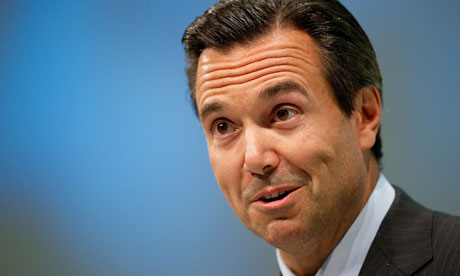

António Horta-Osório, chief executive of Lloyds Banking Group

And as reported in the Guardian -  http://www.guardian.co.uk/business/2012/may/01/lloyds-boss-hits-out-fraudulent-ppi-claims  - "The chief executive of Lloyds Banking Group hit out at fraudulent claims for payment protection insurance compensation on Tuesday as the bailed out bank increased its provision for mis-selling the controversial product by 12% to £3.6bn.

António Horta-Osório said the £375m additional provision was a "minor adjustment" when asked if it would require the bank to pursue any additional clawback of bonuses from former and current directors. Some £1.5m was clawed back following the £3.2bn provision taken last year.

But he criticised the claims management companies that submitted 45% of the claims the bank received in February and March, from customers who typically bought the insurance when taking out a loan, to cover themselves for illness or other hindrances to paying it back. Of the claims submitted by these firms, 25% were from people without Lloyds products."


Yet again, the Law of Unintended Consequences strikes.

Thursday, May 10, 2012

General Marshall and General MacArthur - 1945 ...

In contrast to the Treaty of Versailles after World War I, the Allies had learnt from history. So, instead of punishing Germany and Japan to such an extent that they would re-arm and reassert themselves militarily, General George Marshall in Europe with his Marshall Plan and General Douglas MacArthur separately and, apparently, independently set themselves the task of rebuilding Germany and Japan.


Some aspects of the Marshall Plan are ironic, such as that Germany was relieved of any debt, but fellow Allies like Britain had to pay back the US for war loans such as to supply aircraft and warships, which lasted till the end of 2006, 50 years later.

See:


Their two schemes were so successful that within a couple of generations, Germany (or at least West Germany as it then was) and Japan rose to become two of the world's largest economies rivalling and, in some cases beating, the economies of the victors.

The purpose was to enable Germany and Japan to become self-sufficient and not be a source of resentment and revenge. It was never to create formidable rivals!

Treaty of Versailles, 1918


After World War I, the victors through the Treaty of Versailles - http://www.historylearningsite.co.uk/treaty_of_versailles.htm -  imposed such harsh penalties, including punitive war reparations on Germany that the rise of Hitler (or someone like him) became inevitable.


This is one of the most clear cases of the Law of Unintended Consequences as the intention was to make it difficult if not impossible for Germany to threaten the rest of Europe!

Wednesday, May 9, 2012

Children's care homes

The Guardian: "The heartbreaking case of Niamh Lafferty and Georgia Rowe, who died in a double suicide in 2009, was avoidable, according to an inquiry. If the care home in which the girls both lived had more staff on duty at the time they absconded perhaps someone would have noticed them leaving through the unalarmed fire exit door.


But the additional tragedy of this story is that it is not uncommon for "looked-after children" to end up dead prematurely. Care leavers are significantly over-represented among some of society's most disadvantaged groups. A third of rough sleepers have been in care as children; one fifth are homeless within two years of leaving care; half of prisoners under the age of 25 are care leavers; and 22% are unemployed shortly after leaving school – three times the national average. Many end up in street prostitution, and a mere 6% attend university compared with more than a third of the general population.
Most children in care have suffered appalling abuse, neglect and loss in early life, which is why we should be doing everything we can to place them in loving homes rather than institutions where many of the staff are not experts in dealing with the range of complex problems these youngsters inevitably face. ...
My research and campaigning on prostitution and the sex industry has also brought me into contact with many young women who had previously been in care. One told me that the effects of rape by her father that led to her being removed from the family home were compounded by sexual abuse by a care worker. She said that by the time she was 18 and living alone she had been through a "boot camp" for prostitution. ...
Of course not all care home staff have this attitude, and abuse, while still prevalent, has been flagged up as a serious concern since the major inquiries into the problem back in the 1970s and 80s. Many of those who work with looked-after children do a brilliant job in extremely difficult circumstances. But for the 89,000 looked-after children, the care system is simply not good enough."

Sadly, this is not the only case.  There have been cases in Jersey, Ireland, the US and Canada and, I daresay, elsewhere.  Some involved Catholic priests and nuns.


So, once again, the Law of Unintended Consequences strikes. By bringing together lots of vulnerable children, care homes become a magnet to the perverse who see it as an easy collection of their targets.

Tuesday, May 8, 2012

UK social welfare


Soon after the Second World War when, surprisingly, the British electorate rejected Churchill and voted overwhelmingly for Labour, the social welfare state was born. The idea was that society should not ignore those who were too poor or ill to look after themselves and that the state (namely the rest of the population) should support them. That was indeed a laudable idea.


Of course following the Law of Unintended Consequences, today some 60 plus years later, Britain is experiencing a very high proportion of welfare recipients who do not work, have not worked, and are unfit for work. And in a large proportion of cases, they are sons and daughters of people who have not earned a living; and in a few cases their grandparents did not earn a living. In other words, Britain has institutionalised a dependency culture amongst some of the have not's who, in other words, are condemned to continue to be have not's generation after generation.

There is an old English saying: "Hell is paved with good intentions." Perhaps the British welfare system is one such.

Friday, May 4, 2012

Hanoi's General Giap's "ah ha" moment

A few years after the US pulled out of Vietnam in 1975, General Giap was reported to have said that he now realised what a mistake the Vietnamese army had made in defeating the US. The reason was that the US only helped those it had defeated, like Germany and Japan, but not those who had won!

See - http://unintend-conseq.blogspot.co.uk/2012/05/general-marshall-and-general-macarthur.html


It was not till 1995, 20 years later that the US and Vietnam restored diplomatic relations and finally US aid and support was forthcoming.

Thursday, May 3, 2012

Sub Prime Mortgages


From CBS News, August 31, 2007: "Would you like a mortgage that lends you more than the value of your house?


Would you like it structured so that your first payments are extra low?
If the mortgage weren't structured that way, would you be unable to afford the payments?
Are you convinced that real estate prices will continue to rise?
Do you have a poor credit history?

Congratulations if you answered "Yes" to most or all of those questions! You're an ideal target for a subprime mortgage lender.

Of course, there is a downside amid all the fine print, as hundreds of thousands of American consumers are now finding out. Mortgage delinquencies and foreclosures are way up. Dozens of companies that lent money to anyone with a pulse have gone belly up. And suddenly, some economists are starting to worry that the whole mess could send the U.S. economy into recession."


So, in trying to help the poor Americans to climb up the housing ladder, Fannie Mae and other large mortgage lenders no only caused many of them to lose their houses but triggered a world recession that is still with us four plus years on. Such is a prime (pun intended) example of the law of unintended consequences.